
NEWS
Canada
Made-In-Canada: Carney announces major investment in EV startup
Prime minister says federally backed company would build affordable electric vehicles for Canadian conditions while keeping more of the clean economy in Canadian hands
Ellan Redgale • CBC News • Posted Mar 31, 2026 11:11 PM PDT | Last Updated: 1 hour ago

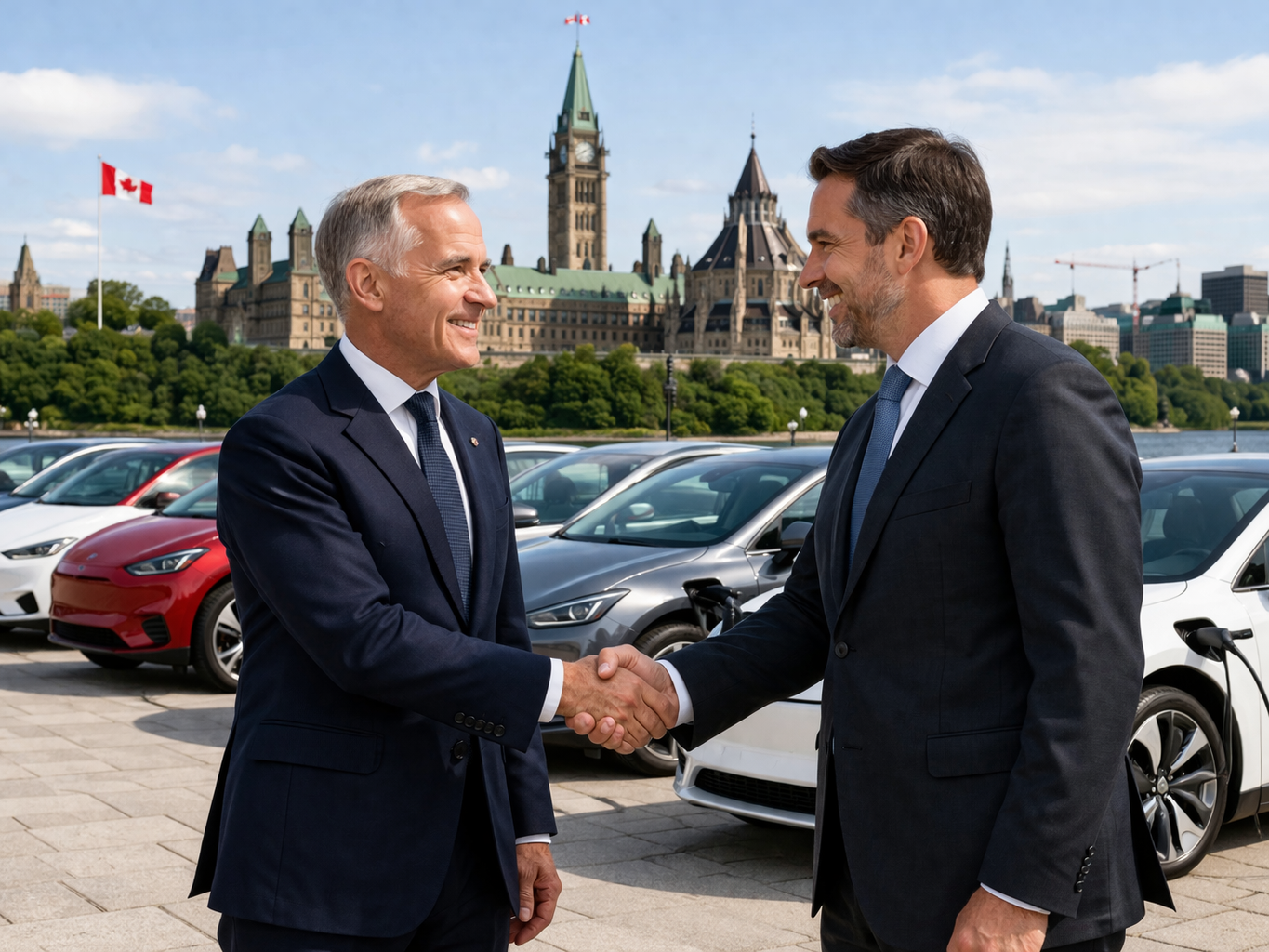
OTTAWA — Prime Minister Mark Carney says the federal government will help launch a new Canadian electric vehicle company, describing the move as both an industrial strategy and a response to the accelerating climate crisis.
Carney made the announcement Wednesday, saying the startup would receive federal backing, remain Canadian-owned and build affordable electric vehicles designed for domestic use. He said the project would help Canada reduce reliance on foreign automakers while capturing more value from its own resources.

Under the plan, the company would produce vehicles built specifically for Canadian conditions: long winters, rough roads, rural distances and the increasingly emotional experience of hearing the word “affordable” attached to anything with four wheels.
“There is no reason Canadians should be waiting for other countries to build the clean economy we keep saying we want,” Carney told reporters. “We have the people, the resources, the industrial base and, increasingly, the motivation that comes from being quietly annoyed all the time.”
Officials said the company would focus on practical models rather than luxury vehicles, with early concepts including a compact SUV, a commuter sedan that can survive February and a pickup truck for Canadians who want to lower emissions without driving what feels like a giant iPad through slush.
A government backgrounder said the vehicles would prioritize durability, winter range and “interiors designed for adults.” Proposed features include real buttons, heating systems that work without a software update and cup holders large enough for a travel mug that does not cost $11 and contain oat foam.

Public ownership safeguards would also be included to prevent the company from being sold off the moment it becomes successful to a foreign conglomerate that would shut down production, keep the logo and continue running ads featuring lakes and acoustic guitars.
One official said the thinking behind the project was simple: Canada has spent years digging useful things out of the ground, shipping them away and then acting mildly surprised when someone sells them back to us in a shinier form for four times the price.
Reaction from opposition figures was immediate.

Alberta Premier Danielle Smith said she would need to review the proposal, but warned that any federally backed EV company sounded like “a taxpayer-funded hatchback fantasy for Laurentian elites.”
She accused Ottawa of trying to replace the free market with “a state-sponsored crossover dreamed up somewhere between Davos and a guilt spiral,” and said Alberta may need to consider “a full range of sovereign responses, up to and including an emotionally necessary prairie separation.”
Smith later clarified that she still supported a united Canada, but added that “national unity becomes harder to defend when Ottawa starts acting like Elon Musk with a pension and better dental.”
Federal Conservatives dismissed the plan as “Tesla, but with more committees,” while New Democrats said it was the kind of idea Liberals only discover after first making it sound less appealing than it is.
Online reaction was mixed, though not entirely cynical. Suggested names for the company included Maple Current, Dominion Electric and Civic Duty Motors. One slogan — Built in Canada, because apparently we have to do everything ourselves — was said to be performing especially well with voters under 45 and men who own three different snow brushes.
Drivers also appeared intrigued by the possibility of an EV designed by people who had actually experienced sleet. “If they make one that starts in February, survives a pothole and lets me turn on the heat without agreeing to new terms and conditions, I’m interested,” said one man in Regina beside a pickup truck that currently burns 16.7 litres per 100 kilometres and has become a source of tension within his family.
By late morning, the announcement had been confirmed as an April Fools’ joke, though not before prompting a wave of sincere discussion online about whether the fake policy made more sense than several real ones.
At press time, thousands of Canadians were still asking the same question: why does every fake climate policy sound more practical than the real ones?

©2026 CBC/Radio-Canada. All rights reserved.